
Follow South Shore Nursing and Rehabilitation on Facebook! Click Here

To see a list of frequently asked questions please Click Here

South Shore | Nursing & Rehabilitation

Latest News

Latest News

Novavax COVID-19, Adjuvanted Vaccine: Overview and Safety

August 26, 2022

GENERAL INFORMATION

Manufacturer: Novavax, Inc.

Number of Shots: 2 doses in the primary series, given 3–8 weeks apart.

People who are moderately or severely immunocompromised should also receive 2 doses, given 3 weeks apart (a 3rd primary dose is not currently authorized).

Booster Shot:  Novavax COVID-19 vaccine is not authorized for use as a booster dose.

Type of Vaccine: Protein subunit

How Given: Shot in the muscle of the upper arm

Does NOT Contain: Eggs, preservatives, latex, metals
See full list of ingredients

Name: NVX-CoV2373

SAFETY DATA SUMMARY

  • COVID-19 vaccines have undergone—and continue to undergo—the most intensive safety monitoring in U.S. history. Side effects that happen within 7 days of getting vaccinated are common but are mostly mild and only last a few days. Some people have reactions that affect their ability to do daily activities.
  • Side effects throughout the body (such as fever, chills, tiredness, and headache) are more common after the second dose of the vaccine.
  • Severe allergic reactions to vaccines are rare but can happen. Cases of myocarditis and pericarditis have been reported in people who received Novavax COVID-19 vaccine.

Learn more about vaccine safety monitoring after a vaccine is authorized or approved for use.

HOW WELL THE VACCINE WORKS

  • Vaccines reduce the risk of COVID-19, including the risk of severe illness and death among people who are fully vaccinated.
  • COVID-19 vaccines are effective. Clinical trials demonstrate that Novavax COVID-19 reduces the risk of COVID-19, including the risk of severe illness and death. However, studies from other COVID-19 vaccines have shown that protection declines over time especially with the Omicron variant.
  • All FDA-approved or authorized COVID-19 vaccines provide substantial protection against COVID-19 hospitalization and death.
  • CDC will continue to provide updates as we learn more.

Learn about Novavax’s clinical trial information for people 18 years and older.

NOVAVAX COVID-19 VACCINE INGREDIENTS

COVID-19 vaccine ingredients are considered safe for most people. Nearly all of the ingredients in COVID-19 vaccines are ingredients found in many foods—fats, sugar, and salts. The Novavax COVID-19 vaccine also includes harmless pieces (proteins) of the virus that causes COVID-19; they are pieces of what is often called the spike protein.  After vaccination, the body creates an immune response to these protein pieces. This response helps protect you from getting sick with COVID-19 in the future. After the body produces an immune response, it discards all the vaccine ingredients, just as it would discard any substance that cells no longer need. This process is a part of normal body functioning.

All COVID-19 vaccines are manufactured with as few ingredients as possible and with very small amounts of each ingredient. Each ingredient in the vaccine serves a specific purpose as seen in the table below.

Type of IngredientIngredientPurpose
ProteinSARS-CoV-2 recombinant spike proteinCauses an immune response that helps protect the body from getting sick with COVID-19 in the future.
Lipids (fats)Cholesterol PhosphatidylcholineWork together to help the recombinant spike protein enter cells
AdjuvantFraction-A and Fraction-C of Quillaja saponaria Molina extract.Facilitates activation of the cells of the innate immune system.
Salts, sugar, and acidDisodium hydrogen phosphate heptahydrate Disodium hydrogen phosphate dihydrate Polysorbate-80 Potassium chloride (common food salt) Potassium dihydrogen phosphate (common food salt) Sodium chloride (basic table salt) Sodium dihydrogen phosphate monohydrate Sodium hydroxide or hydrochloric acid WaterWork together to help keep the vaccine molecules stable while the vaccine is manufactured, shipped, and stored until it is ready to be given to a vaccine recipient.

The vaccine may also contain very small amounts of ingredients from the manufacturing stage, which can be found in the EUA Fact Sheet.

INGREDIENTS THAT ARE NOT USED IN COVID-19 VACCINES

The above table lists ALL ingredients in the Novavax COVID-19 vaccine. There are NO ingredients in this vaccine beyond what is listed in the table. The Novavax COVID-19 vaccine has:

  • No preservatives such as thimerosal or mercury or any other preservatives.
  • No antibiotics such as sulfonamide or any other antibiotics.
  • No medicines or therapeutics such as ivermectin or any other medications.
  • No tissues such as aborted fetal cells, gelatin, or any materials from any animal.
  • No food proteins such as eggs or egg products, gluten, peanuts, tree nuts, nut products, or any nut byproducts (COVID-19 vaccines are not manufactured in facilities that produce food products).
  • No metals such as iron, nickel, cobalt, titanium, rare earth alloys, or any manufactured products like microelectronics, electrodes, carbon nanotubes or other nanostructures, or nanowire semiconductors.
  • No latex. The vial stoppers used to hold the vaccine also do not contain latex.

To learn more, please visit https://www.cdc.gov/coronavirus/2019-ncov/vaccines/novavax.html.
Understanding Exposure Risks

August 22, 2022


Learning about how COVID-19 spreads and the factors that can increase or decrease that risk can help you make informed choices.

The questions below are written in past tense to help you assess the likelihood that you were infected when you were around a person with COVID-19. If multiple factors below indicate higher transmission risk, you should follow the steps for what to do if you are exposed.

You can also ask yourself the same questions, but about future interactions with others, to help you decide what prevention actions to take. If multiple factors below indicate higher transmission risk, you should consider adding more prevention actions.

Factors that lower or increase risk of transmission

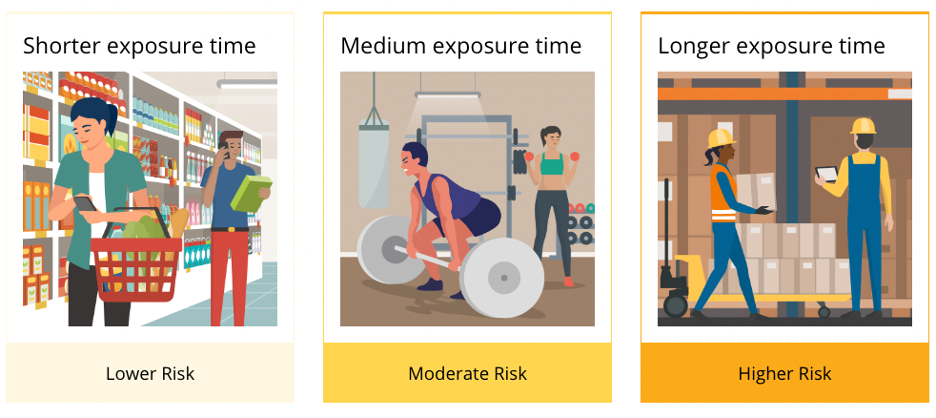
Length of time: How long were you with the infected person?

Longer exposure time increases the risk of transmission (for example, contact longer than 15 minutes is more likely to result in transmission than two minutes of contact).

This image has an empty alt attribute; its file name is Picture1.png

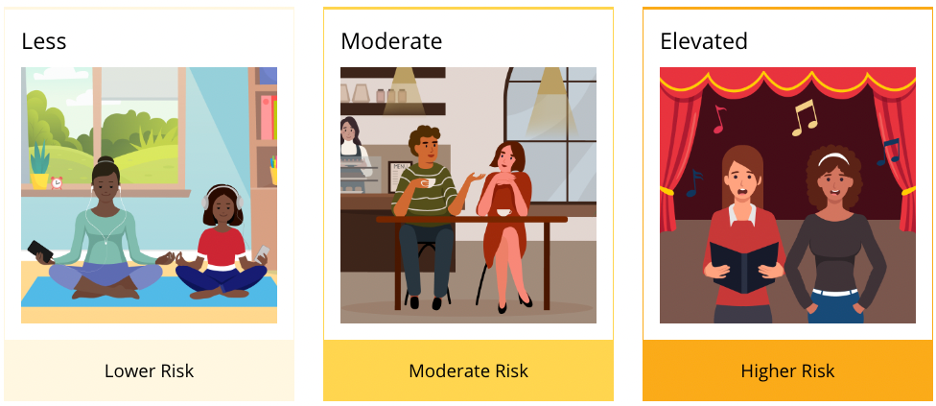
Cough or heavy breathing: Was the infected person coughing, singing, shouting, or breathing heavily?

Activities like coughing, singing, shouting, or breathing heavily due to exertion increase the risk of transmission.

This image has an empty alt attribute; its file name is Picture2.png

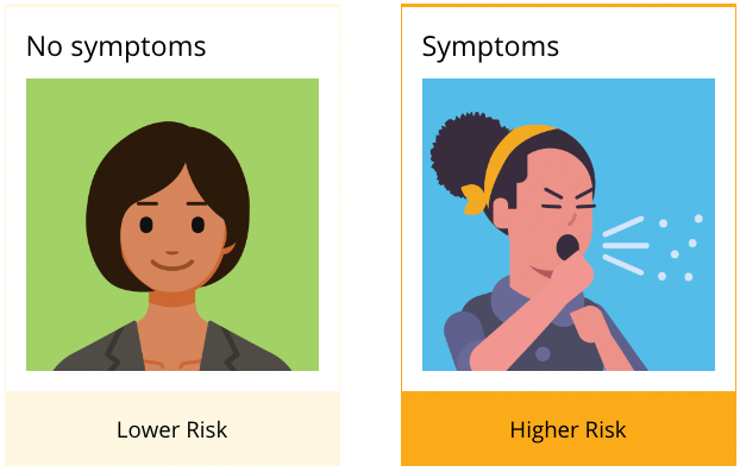
Symptoms: Did the infected person have symptoms at the time?

Being around people who are symptomatic increases the risk of transmission.

This image has an empty alt attribute; its file name is Picture3.png

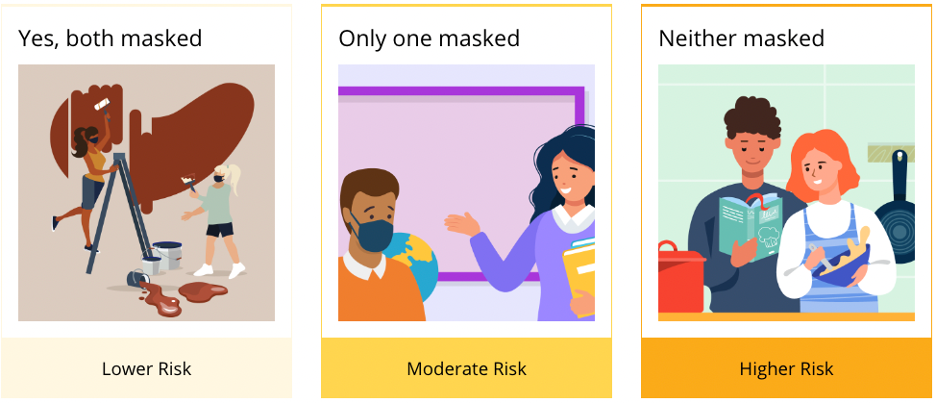
Masks: Were you or the infected person or both wearing a respirator (for example, N95) or high-quality mask?

If one person was wearing a mask, the risk of transmission is decreased, and if both people were wearing masks, the risk is substantially decreased. Risk is also lower if the mask or respirator is a type that offers greater protection.

This image has an empty alt attribute; its file name is Picture4.png

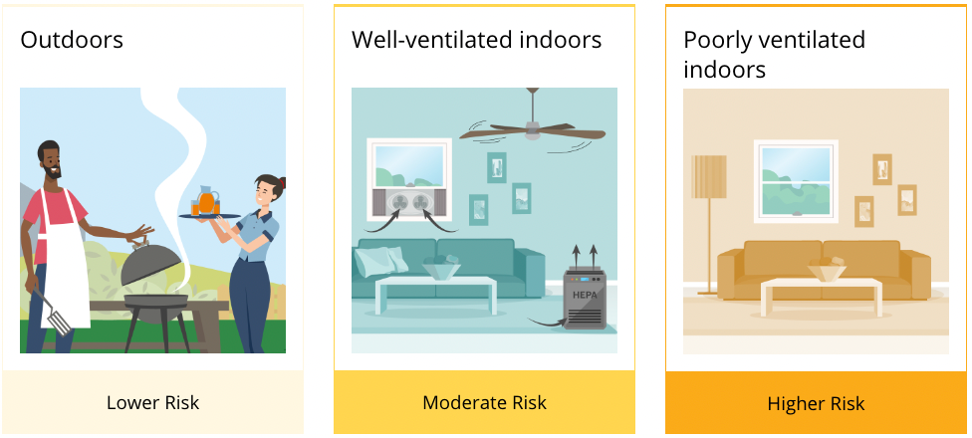
Ventilation and filtration: How well-ventilated was the space?

More outdoor air can decrease the risk of transmission. Being outside would be lower exposure risk than being indoors, even with good ventilation and filtration; both of those options would be lower risk than being indoors with poor ventilation or filtration. See the Interactive Home Ventilation Tool.

This image has an empty alt attribute; its file name is Picture5.png

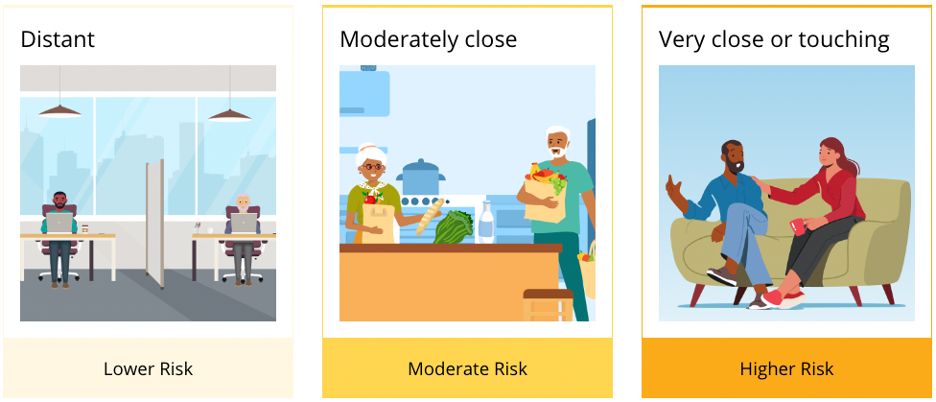
Distance: How close was the infected person to you?

Being closer to someone who is infected with COVID-19 increases the risk of transmission. Crowded settings can raise your likelihood of being close to someone with COVID-19.

This image has an empty alt attribute; its file name is Picture6.png

To learn more, please visit https://www.cdc.gov/coronavirus/2019-ncov/your-health/risks-exposure.htm

Selected Adverse Events Reported after COVID-19 Vaccination

August 12, 2022

What You Need to Know

The benefits of COVID-19 vaccination continue to outweigh any potential risks.

CDC is providing timely updates on the following adverse events of interest:

  • Anaphylaxis after COVID-19 vaccination is rare and has occurred at a rate of approximately 5 cases per one million vaccine doses administered. Anaphylaxis, a severe type of allergic reaction, can occur after any kind of vaccination. If it happens, healthcare providers can effectively and immediately treat the reaction. Learn more about COVID-19 vaccines and allergic reactions, including anaphylaxis.

CDC scientists have conducted detailed reviews of cases of anaphylaxis and made the information available to healthcare providers and the public:

A review of reports indicates a causal relationship between the J&J/Janssen COVID-19 vaccine and TTS. CDC scientists have conducted detailed reviews of TTS cases and made the information available to healthcare providers and the public:

Based on a recent analysis of data from the Vaccine Safety Datalink, the rate of GBS within the first 21 days following J&J/Janssen COVID-19 vaccination was found to be 21 times higher than after Pfizer-BioNTech or Moderna (mRNA COVID-19 vaccines). After the first 42 days, the rate of GBS was 11 times higher following J&J/Janssen COVID-19 vaccination. The analysis found no increased risk of GBS after Pfizer-BioNTech or Moderna (mRNA COVID-19 vaccines). CDC and FDA will continue to monitor for and evaluate reports of GBS occurring after COVID-19 vaccination and will share more information as it becomes available.

  • Myocarditis and pericarditis after COVID-19 vaccination are rare. Myocarditis is inflammation of the heart muscle, and pericarditis is inflammation of the outer lining of the heart. Most patients with myocarditis or pericarditis after COVID-19 vaccination responded well to medicine and rest and felt better quickly. Most cases have been reported after receiving Pfizer-BioNTech or Moderna (mRNA COVID-19 vaccines), particularly in male adolescents and young adults.

review of vaccine safety data in VAERS from December 2020–August 2021 found a small but increased risk of myocarditis after mRNA COVID-19 vaccines. Over 350 million mRNA vaccines were given during the study period and CDC scientists found that rates of myocarditis were highest following the second dose of an mRNA vaccine among males in the following age groups:

  • 12–15 years (70.7 cases per one million doses of Pfizer-BioNTech)
  • 16–17 years (105.9 cases per one million doses of Pfizer-BioNTech)
  • 18–24 years (52.4 cases and 56.3 cases per million doses of Pfizer-BioNTech and Moderna, respectively)

Multiple studies and reviews of data from vaccine safety monitoring systems continue to show that vaccines are safe. As a result, the agency will refocus enhanced surveillance and safety monitoring efforts toward children and adolescents.

As of July 28, 2022, there have been 1,010 preliminary reports in VAERS among people younger than age 18 years under review for potential cases of myocarditis and pericarditis. Of these, 258 remain under review. Through confirmation of symptoms and diagnostics by provider interview or review of medical records, 665 reports have been verified to meet CDC’s working case definition for myocarditis. See below for counts of verified reports of myocarditis by age group.

5-11 years: 22 verified reports of myocarditis after 20,404,074 doses administered

12-15 years: 346 verified reports of myocarditis after 24,198,309 doses administered

16-17 years: 297 verified reports of myocarditis after 13,326,016 doses administered

As the COVID-19 vaccines are authorized for younger children, CDC and FDA will continue to monitor for and evaluate reports of myocarditis and pericarditis after COVID-19 vaccination and will share more information as it becomes available. Learn more about myocarditis and pericarditis, including clinical considerations, after mRNA COVID-19 vaccination.

  • Reports of death after COVID-19 vaccination are rare. FDA requires healthcare providers to report any death after COVID-19 vaccination to VAERS, even if it’s unclear whether the vaccine was the cause. Reports of adverse events to VAERS following vaccination, including deaths, do not necessarily mean that a vaccine caused a health problem. More than 603 million doses of COVID-19 vaccines were administered in the United States from December 14, 2020, through July 27, 2022. During this time, VAERS received 15,700 preliminary reports of death (0.0026%) among people who received a COVID-19 vaccine. CDC and FDA clinicians review reports of death to VAERS including death certificates, autopsy, and medical records.

Continued monitoring has identified nine deaths causally associated with J&J/Janssen COVID-19 vaccination. CDC and FDA continue to review reports of death following COVID-19 vaccination and update information as it becomes available.

To learn more, please visit https://www.cdc.gov/coronavirus/2019-ncov/vaccines/safety/adverse-events.html

Understanding Protein Subunit COVID-19 Vaccines

July 26, 2022

The Novavax COVID-19 vaccine is a protein subunit COVID-19 vaccine that is authorized for use in the United States under Emergency Use Authorization. Learn more about Novavax COVID-19 vaccine, including who can get it, doses, and ingredients.

How Protein Subunit COVID-19 Vaccines Work

Protein subunit vaccines contain pieces (proteins) of the virus that causes COVID-19. These virus pieces are the spike protein. The vaccine also contains another ingredient called an adjuvant that helps the immune system respond to that spike protein in the future. Once the immune system knows how to respond to the spike protein, the immune system will be able to respond quickly to the actual virus spike protein and protect you against COVID-19.

  1. First, protein subunit COVID-19 vaccines are given in the upper arm muscle. After vaccination, nearby cells pick up these proteins.
  2. Next, our immune system recognizes that these proteins do not belong there. Another ingredient in the vaccine, the adjuvant, helps our immune system to produce antibodies and activate other immune cells to fight off what it thinks is an infection. This is what your body might do if you got sick with COVID-19.
  3. At the end of the process, our bodies have learned how to help protect against future infection with the virus that causes COVID-19. The benefit is that people get this protection from a vaccine, without ever having to risk the potentially serious consequences of getting sick with COVID-19. Many side effects from getting the vaccine are normal signs the body is building protection.

Facts About Protein Subunit COVID-19 Vaccines

Protein subunit COVID-19 vaccines cannot cause COVID-19 or other illnesses.

  • Protein subunit COVID-19 vaccines do not use any live virus.
  • Protein subunit COVID-19 vaccines cannot cause infection with the virus that causes COVID-19 or other viruses.

They do not affect or interact with our DNA.

  • The protein pieces do not enter the nucleus of the cell where our DNA (genetic material) is located, so they cannot change or influence our genes.

Protein Subunit COVID-19 Vaccines Have Been Rigorously Evaluated for Safety

COVID-19 vaccines are safe and effective.

Protein subunit COVID-19 vaccines have been held to the same rigorous safety and effectiveness standards as all other types of vaccines in the United States. The only COVID-19 vaccines the Food and Drug Administration (FDA) makes available for use in the United States (by approval or emergency use authorization) are those that meet these standards.

Protein Subunit Vaccines Have Been Used for Years

More than 30 years ago, a hepatitis B vaccine became the first protein subunit vaccine to be approved for use in people in the United States. Another example of other protein subunit vaccines used in the United States today include acellular pertussis (whooping cough) vaccines.

To learn more, please visit https://www.cdc.gov/coronavirus/2019-ncov/vaccines/different-vaccines/proteinsubunit.html

COVID-19 After Vaccination: Possible Breakthrough Infection

July 12, 2022

COVID-19 vaccines help protect against severe illness, hospitalization and death. COVID-19 vaccines also help protect against infection. People who are vaccinated may still get COVID-19. When people who have been vaccinated get COVID-19, they are much less likely to experience severe symptoms than people who are unvaccinated.

To get the best protection against COVID-19, especially against severe illness and hospitalization, stay up to date on your COVID-19 vaccines.

When someone who is vaccinated with either a primary series or a primary series plus a booster dose gets infected with the virus that causes COVID-19, it is referred to as a “vaccine breakthrough infection.”

When people who are vaccinated get COVID-19 get a breakthrough infection, they are much less likely to experience severe symptoms than people who are unvaccinated.

People who get vaccine breakthrough infections can spread COVID-19 to other people. When a community reports more COVID-19 infections, that means more virus is circulating. When more virus is circulating, more breakthrough infections will occur even when vaccination rates are high. Even if you are vaccinated, if you live in a county with a high COVID-19 Community Level, you and others in your community, whether vaccinated or not, should take more steps to protect yourself and others, like wearing a mask in indoor public places.

CDC monitors reported vaccine breakthrough infections to better understand patterns of COVID-19 among people who are vaccinated and unvaccinated. The latest rates of COVID-19 cases and deaths by vaccination status are available on the CDC COVID Data Tracker.

To learn more, please visit https://www.cdc.gov/coronavirus/2019-ncov/vaccines/effectiveness/why-measure-effectiveness/breakthrough-cases.html

Visiting Older Adults in Resident Communities

July 1, 2022

Residential communities for older adults may combine nursing, assisted living, and independent living lifestyles. Each community may face different risks and decide to put in place less restrictive or more restrictive protocols.

To help protect friends and family members who live in these communities, get vaccinated. CDC has also issued updated recommendations for visitations at post-acute facilities. These recommendations align with the Centers for Medicare and Medicaid Services (CMS)external iconexternal icon guidance for visitations under various circumstances.

Learn more about the risks among people who live in nursing homes or long-term care facilities and about CDC’s guidance for preventing the spread COVID-19 infection in nursing homes.

There is no way to ensure you have zero risk of getting the virus that causes COVID-19.  So, it is important to understand the risks and know how to reduce your risk as much as possible if or when you do resume some activitiesrun errands, and attend events and gatherings.

While it is generally safest to implement universal use of source control for everyone in a healthcare setting, the following allowances could be considered for individuals who are up to date with all recommended COVID-19 vaccine doses (who do not otherwise meet the criteria described above) in healthcare facilities located in counties with low to moderate community transmission. These individuals might choose to continue using source control if they or someone in their household is immunocompromised or at increased risk for severe disease, or if someone in their household is not up to date with all recommended COVID-19 vaccine doses.

  • HCP who are up to date with all recommended COVID-19 vaccine doses:
    • Could choose not to wear source control or physically distance when they are in well-defined areas that are restricted from patient access (e.g., staff meeting rooms, kitchen).
      • They should wear source control when they are in areas of the healthcare facility where they could encounter patients (e.g., hospital cafeteria, common halls/corridors).
  • Patient Visitation:
    • Indoor visitation (in single-person rooms; in multi-person rooms, when roommates are not present; or in designated visitation areas when others are not present): The safest practice is for patients and visitors to wear source control and physically distance, particularly if either of them are at risk for severe disease or are unvaccinated.
      • If the patient and all their visitor(s) are up to date with all recommended COVID-19 vaccine doses, they can choose not to wear source control and to have physical contact.
      • Visitors should wear source control when around other residents or HCP, regardless of vaccination status.
    • Outdoor Visitation: Patients and their visitors should follow the source control and physical distancing recommendations for outdoor settings described on the page addressing Your Guide to Masks.
  • Residents who are up to date with all recommended COVID-19 vaccine doses in Nursing Homes in Areas of Low to Moderate Transmission:
    • Nursing homes are healthcare settings, but they also serve as a home for long-stay residents and quality of life should be balanced with risks for transmission. In light of this, consideration could be given to allowing residents who are up to date with all recommended COVID-19 vaccine doses to not use source control when in communal areas of the facility; however, residents at increased risk for severe disease should still consider continuing to practice physical distancing and use of source control

To learn more, please visit https://www.cdc.gov/coronavirus/2019-ncov/hcp/infection-control-recommendations.html.

From the Desk of the CEO: Celebrating National Nursing Assistants Week

June 21, 2022

“I entered skilled nursing as a Certified Nursing Assistant (CNA). During this role, I developed love and compassion for the elderly. It gave me an opportunity to learn who each of these people were, hear their stories, and listen to the words of wisdom they often imparted to me. They encouraged me to continue to grow and make a difference in long-term care. As I continued in my healthcare journey, there were various leaders who believed in me and continued to provide opportunities and experiences. I continued to grow from one role to the next all while expanding my education of the field. I am thankful for each role that I’ve held through the years. Each member of the nursing team is important and needed, but the role of a CNA is invaluable. They are the backbone of the long-term care industry. They are often the unsung heroes that become more like family to a Resident than a caregiver. We honor and give gratitude to those CNA’s that answer the call every single day and make unmeasurable impact.”

CEO, Bernie McGuinness

Understanding mRNA COVID-19 Vaccines

June 20, 2022

The Pfizer-BioNTech and Moderna COVID-19 vaccines are messenger RNA vaccines, also called mRNA vaccines. Learn more about Pfizer-BioNTech and Moderna COVID-19 vaccines, including who can get them, doses, and ingredients.

How mRNA COVID-19 Vaccines Work

To trigger an immune response, many vaccines put a weakened or inactivated germ into our bodies. Not mRNA vaccines. Instead, mRNA vaccines use mRNA created in a laboratory to teach our cells how to make a protein—or even just a piece of a protein—that triggers an immune response inside our bodies. That immune response, which produces antibodies, is what helps protect us from getting sick from that germ in the future.

  1. First, mRNA COVID-19 vaccines are given in the upper arm muscle. After vaccination, the mRNA will enter the muscle cells. Once inside, they use the cells’ machinery to produce a harmless piece of what is called the spike protein. The spike protein is found on the surface of the virus that causes COVID-19. After the protein piece is made, our cells break down the mRNA and remove it.
  2. Next, our cells display the spike protein piece on their surface. Our immune system recognizes that the protein does not belong there. This triggers our immune system to produce antibodies and activate other immune cells to fight off what it thinks is an infection. This is what your body might do if you got sick with COVID-19.
  3. At the end of the process, our bodies have learned how to help protect against future infection with the virus that causes COVID-19. The benefit is that people get this protection from a vaccine, without ever having to risk the potentially serious consequences of getting sick with COVID-19. Any side effects from getting the vaccine are normal signs the body is building protection.

mRNA COVID-19 Vaccines Have Been Rigorously Evaluated for Safety

COVID-19 vaccines are safe and effective.

mRNA COVID-19 vaccines have been held to the same rigorous safety and effectiveness standards as all other types of vaccines in the United States. The only COVID-19 vaccines the Food and Drug Administration (FDA) makes available for use in the United States (by approval or emergency use authorization) are those that meet these standards.

While COVID-19 vaccines were developed rapidly, all steps have been taken to ensure their safety and effectiveness.

mRNA Vaccines Are Newly Available to the Public, but Have Been Studied for Decades

Researchers have been studying and working with mRNA vaccines for decades. Interest has grown in these vaccines because they can be developed in a laboratory using readily available materials. This means vaccines can be developed and produced in large quantities faster than with other methods for making vaccines.

mRNA vaccines have been studied before for flu, Zika, rabies, and cytomegalovirus (CMV). As soon as the necessary information about the virus that causes COVID-19 was available, scientists began designing the mRNA instructions for cells to build the unique spike protein into an mRNA vaccine.

Future mRNA vaccine technology may allow for one vaccine to provide protection against multiple diseases, thus decreasing the number of shots needed for protection against common vaccine-preventable diseases.

Beyond vaccines, cancer research has used mRNA to trigger the immune system to target specific cancer cells.

To learn more, please visit https://www.cdc.gov/coronavirus/2019-ncov/vaccines/different-vaccines/mrna.html

COVID-19 Vaccines are Free to the Public

June 13, 2022

What You Need to Know

  • COVID-19 vaccines are available for everyone ages 5 years and older at no cost.
  • Vaccines were paid for with taxpayer dollars and will be given free of charge to all people living in the United States, regardless of insurance or immigration status.
  • COVID-19 vaccination is an important tool to help stop the pandemic.
  • CDC recommends you get a COVID-19 vaccine as soon as you can.

Be Aware of Scams

If anyone asks you to pay for access to a COVID-19 vaccine, you can bet it’s a scam. Don’t share your personal or financial information if someone calls, texts, or emails you promising access to a vaccine for an extra fee.

COVID-19 vaccination providers cannot:

  • Charge you for a vaccine
  • Charge you directly for any administration fees, copays, or coinsurance
  • Deny vaccination to anyone who does not have health insurance coverage, is underinsured, or is out of network
  • Charge an office visit or other fee to the recipient if the only service provided is a COVID-19 vaccination
  • Require additional services in order for a person to receive a COVID-19 vaccine; however, additional healthcare services can be provided at the same time and billed as appropriate

COVID-19 vaccination providers can:

  • Seek appropriate reimbursement from the recipient’s plan or program (e.g., private health insurance, Medicare, Medicaid) for a vaccine administration fee
    • However, providers cannot charge the vaccine recipient the balance of the bill.

Anyone in the United States Can Get Vaccinated

The federal government is providing vaccines free of charge to everyone 5 years and older living in the United States, regardless of their immigration or health insurance status.

CDC does not require U.S. citizenship for individuals to receive a COVID-19 vaccine. Jurisdictions (state, tribal, local, and territorial) cannot add U.S. citizenship requirements or require U.S. citizenship verification as a requirement for vaccination.

To learn more, please visit https://www.cdc.gov/coronavirus/2019-ncov/vaccines/no-cost.html

Telehealth and Telemedicine during COVID-19

May 31, 2022

KEY POINTS

  • In 2020, countries reported on average, about half of essential health services were disrupted -WHO “pulse survey“external icon
  • Pursue telehealth as an alternative to face-to-face healthcare services, commonly used pre-pandemic, to:
    • Reduce unnecessary exposure to COVID-19,
    • Help mitigate the spread of the virus, and
    • Reduce surges in hospitals and clinics.

This guidance document is developed to encourage healthcare providers to explore ways of meeting the essential healthcare needs of the community using innovative telehealth modalities and technologies; and expand the use of telehealth in the care of patients, and telemedicine in the care of COVID-19 and other non-COVID-19 patients.

WHAT IS TELEHEALTH?

Telehealth is remote patient care and monitoring. It allows direct transmission of a patient’s clinical measurements from a distance to their healthcare provider and may or may not be in real timeThe telehealth session may also be facilitated by a Healthcare Professional (to other healthcare professionals), Village Health Volunteer -VHV, a Community Health Worker -CHW visiting the patient, or by the patient him/her-self, a parent or a legal guardian. Telehealth can be any combination of healthcare services including telemedicine. Some healthcare specialties default to “referring to all of such services” as telehealth. “TeleCOVID-19” care is Telemedicine.

Examples of Telehealth Care include:

  • Screening for COVID-19, testing recommendations, and guidance on isolation or quarantine
  • General health care (i.e. wellness visits, blood pressure control, advice about certain non-emergency illnesses, like common rashes)
  • Non-emergency follow-up clinics
  • Prescriptions for medication
  • Nutrition counseling
  • Mental health counseling
  • Physical therapy exercise
  • Teleradiology
  • Tele-intensive care (in infectious disease hospitalizations)
  • Telemedicine

Telehealth  decreases contact with healthcare facilities, other patients, and healthcare staff in order to reduce the risk of COVID-19 spread in the community.

Generally, Telehealth Modalities include:  

  • Synchronous: Real-time telephone or live audio-video interaction, typically with a patient, using a smartphone, tablet, or computer.
    • For example: In some cases, peripheral medical equipment (e.g., digital stethoscopes, otoscopes, ultrasounds) can be used by another health care provider (e.g., nurse, medical assistant) physically with the patient, while the consulting medical provider conducts a remote evaluation.
  • Asynchronous:The provider and patient communication does not happen in real time.

For example, “store and forward” technology allows messages, images, or data to be collected at one point in time and interpreted or responded to later. Patient portals can facilitate this type of communication between provider and patient through secure messaging. Other examples of telehealth modalities developed/used by American College of Obstetricians and Gynecologistsexternal icon include:

  1. Live, two-way (or real-time) synchronous audio and video allows specialists, local physicians, and patients to see and hear each other in real-time to discuss conditions e.g. via phone or computer (also defined above).
  2. Store-and-forward, also referred to as “asynchronous telemedicine,” sends medical imaging such as X-rays, photos, ultrasound recordings, or other static and video medical imaging to remote specialists for analysis and future consultation (also defined above).
  3. Remote patient monitoring collects personal health and medical data from a patient in one location and electronically transmits the data to a physician in a different location for use in care and related support.
  4. mHealth is a general term for self-managed patient care using mobile phones or other wireless technology and does not necessarily involve monitoring by a physician. It is most commonly used to deliver or reinforce patient education about preventive care and provide medication reminders, appointment reminders, and other essential self-care steps that patients should undertake to maintain their optimal obstetric health.

WHAT IS TELEMEDICINE?

Telemedicine is the use of electronic information and telecommunication technology to get needed health care while practicing physical distancing.  This encourages meaningful use of patient health measures to help guide the engagement of patient in care.

Telemedicine goals for Developing Countries should includeexternal icon, but not be limited to:

  • Remote diagnosing and teleconsulting* system. Data (including signals and images) are locally (patient-side) acquired and stored, and then forwarded to the main hospital, where physicians can analyze those data. The remote (physician-side) hospital will then send back the diagnosis.
  • Remote diagnosis performed with patient assisted by nurses. If no physician is in the neighborhood: such a situation typically occurs in rural locations of developing countries, and in some cases a preliminary diagnosis is locally performed by the aid of a decision support system (DSS).
  • Remote monitoring system. The patient is monitored in the remote location, his/her signals are continuously acquired, forwarded to the main hospital, and possibly, locally analyzed by a DSS. Alarms are remotely detected and transmitted back to the patient-side. The monitoring system can be managed and locally controlled by a physician or by a nurse.
  • Remote intervention system. The patient enters the operating room, the intervention is performed through a local (patient-side) robot that is remotely controlled by a physician in the main hospital. The remote intervention requires that some local assistance is performed by a physician or by a nurse.
  • Remote education (e-learning) system. Students or caregivers (mostly physicians, nurses, and technicians) attend classes taught from remote academic institutions, and possibly by a bi-directional communication interact with the teacher by making up questions. Remote education can be locally assisted by a local tutor, during and/or after the classes.

*Note: Teleconsulting, i.e., expert second opinion, is performed among physicians, where a non-specialist physician requires a remote consultation with one or more specialist physicians: typically, such a situation occurs in emergency centers of rural locations or in minor hospitals of developed countries, or in any location of developing countries.

POTENTIAL LIMITATIONS OF TELEHEALTH

Adaptations to telehealth may need to be considered in certain situations where in-person visits are more appropriate such as:

  • Due to urgency, a person’s underlying health conditions, or the fact that a physical exam or laboratory testing is needed for medical decision making.
  • If sensitive topics need to be addressed, especially if there is patient discomfort or concern for privacy.
  • Limited access to technological devices (e.g., phones, tablets, computers) or connectivity. This may be especially true for those living in rural settings.
  • When healthcare workers or patients may be less comfortable with using the technology, and may prefer an in-person visit.
  • When virtual visits are not readily accepted in lieu of in-person visits by healthcare workers or patients.

To learn more, please visit https://www.cdc.gov/coronavirus/2019-ncov/global-covid-19/telehealth-covid19-nonUS.html